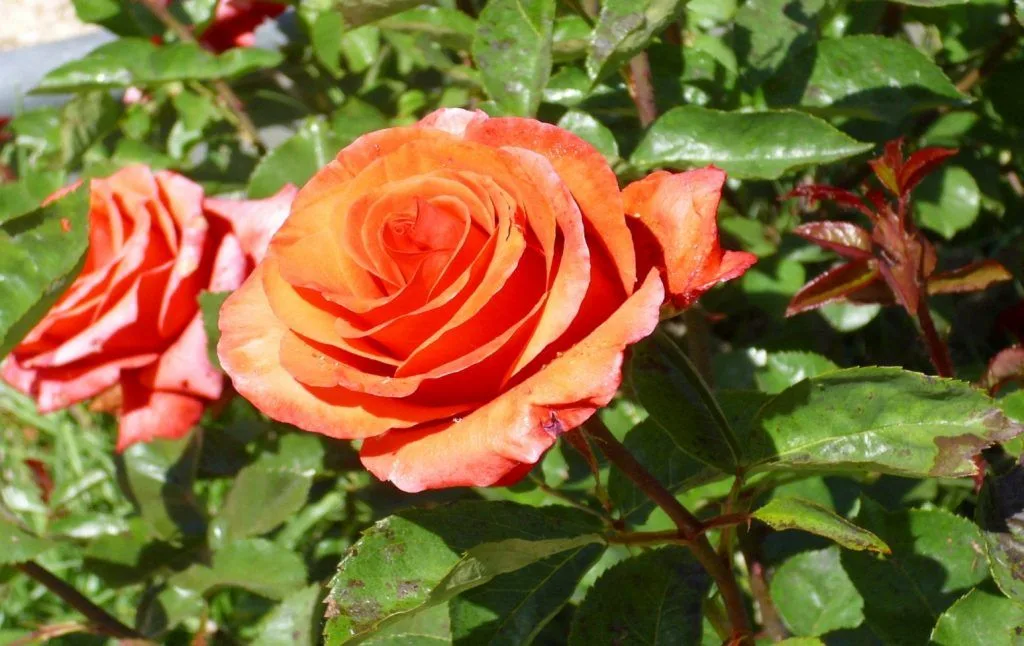
We've just kicked off spring on March 20. Let's take advantage of the longer days and warmer temperatures to suggest you enjoy an explosion of color and life in 5 standout Madrid parks that, from now on, become the stages where Madrileños do all kinds of plans: from gathering with friends for a picnic or romantic walks to outdoor sports and cultural activities, among others. There are as many plans as there are people, so let your imagination fly and open up to spring:
El Retiro
This is the best-known park and one of the lungs of the capital, with 125 hectares and more than 15,000 trees. Its origins begin when the Order of Saint Jerome built its monastery outside the city walls and equipped it with royal chambers for the kings to retire to during periods of mourning, Lent or after religious events. In the 17th century, Felipe IV's favorite, the Conde-Duque de Olivares, commissioned the construction of a leisure estate for the kings. During the War of Independence in the 19th century, the French troops took this place as their barracks, causing serious damage — some of which was unsalvageable, with part of its heritage being lost. In 1868 it opened to the public. And in 1935 it was declared a Historic Artistic Garden.Parque del Retiro offers many notable spots, like the Palacio de Cristal, the Palacio de Velázquez, the Casa de Vacas Cultural Center; the monument to Alfonso XII; the follies of the Casa del Pescador, the Artificial Mountain and the Casa del Contrabandista. Among its most emblematic fountains, the most important are the fountains of the Fallen Angel and of the Galápagos.
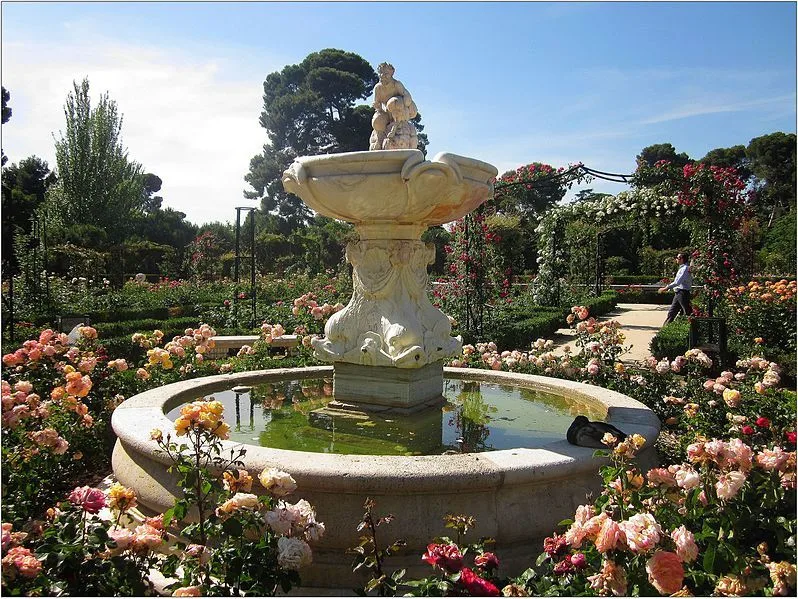
At this time of year it's essential to visit the Cecilio Rodríguez Gardens — classical in style with Andalusian touches, where the peacocks in their mating period strut with their feathers fanned out in vibrant blues and greens, performing the courtship dance. These gardens are between the Paseo de Coches and Calle Menéndez Pidal. Another important spot is La Rosaleda — elliptical in shape and made up of a great variety of roses that form a multicolored chromatic range. It's the most visited by Madrileños given its location at the end of the Paseo de Coches and near the Plaza del Ángel Caído, in the center of the city.
In addition, several activities and events take place in spring at Parque del Retiro: from April you'll be able to access the Alfonso XII monument on the main pond; during the San Isidro festivities in mid-May, the pond also becomes the protagonist with its show of lights, music and fireworks; and also in May, symphonic music concerts begin at the Templete bandstand.
El Capricho
This Romantic gem, unique in Madrid, located in the Alameda de Osuna neighborhood, within the Barajas district, is one of the city's great unknowns. It has 14 hectares divided into two zones: the French-style garden and the English-style garden.It was commissioned by the Duchess of Osuna, Doña María Josefa de la Soledad Alonso Pimentel, in 1787. During the French invasion of 1808 it passed into the hands of a French general who used the estate as facilities for his troops. After the French army's withdrawal, the property returned to its owner, who undertook the renovation of the place. The owners continued to care for the property and use it for high-society parties until the widow of Mariano Téllez-Girón, grandson of the Duchess of Osuna, was forced to auction it off to help pay her debts in 1882. Gustavo Bauer bought it and the estate was kept in good condition by the Bauer family until 1936. During the Civil War, General Miaja ordered the construction of underground anti-aircraft shelters connected by tunnels and galleries. It was declared an Artistic Garden in 1943. The Madrid City Council bought it in 1974 and declared it a Property of Cultural Interest in 1985. From then on, several renovations and adaptations for visitors were carried out, and visiting was restricted to Saturdays, Sundays and holidays.
In order to maintain the park's cleanliness and conservation, the influx of visitors is limited to about 1,000 people per day, and food, drinks, animals and bicycles are not allowed in.
It has many charming corners, like the Exedra with its semicircular layout surrounded by sphinxes, the Lower Garden — the oldest one that surrounded the original house and where you can enjoy the maze, the Fountain of the Dolphins or of the Frogs, the neoclassical Palace which will become a museum dedicated to the Duchess of Osuna and the Enlightenment, the Bacchus Templete, the hermitage, the boat dock or Casa de Cañas, the ballroom and the Abejero — a circular room finished at its ends with honeycombs where you could see the bees working.
In spring, the thousands of lilacs (the Duchess of Osuna's favorite flowers) start blooming, giving a touch of lilac and mauve to its meadows and gardens.
Also in spring, visits to General Miaja's bunker resume — one of the most in-demand activities by Madrileños.
Quinta de los Molinos
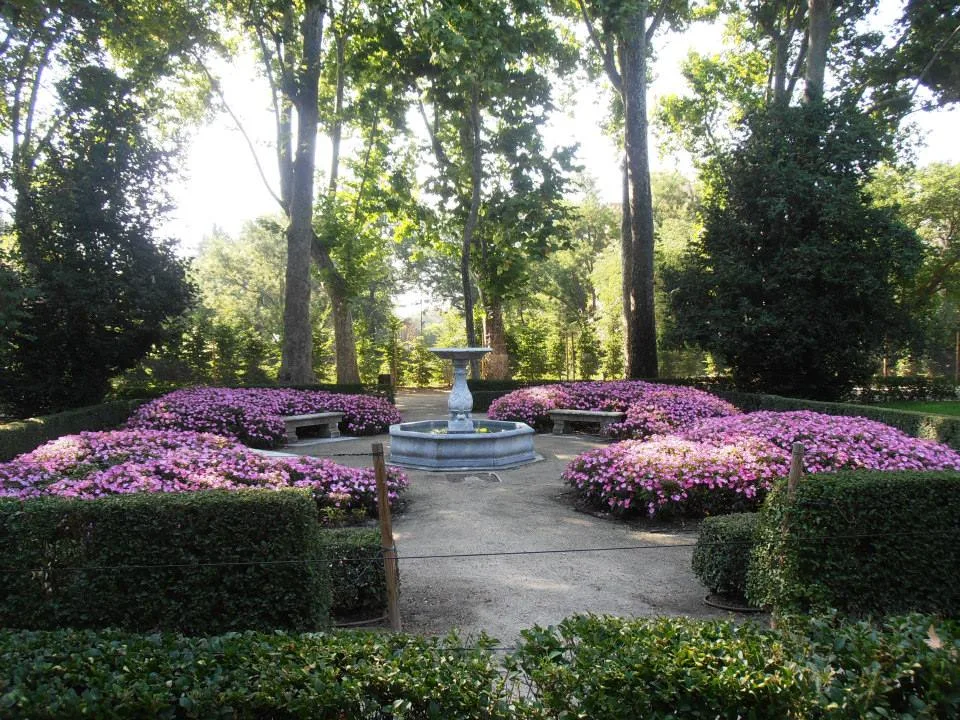
This historic park is located in the Salvador neighborhood, in the San Blas district. It's another of Madrid's unknowns due to its location at the end of Calle Alcalá. It covers 25 hectares divided into the northern zone of Romantic landscape style and the southern zone of agricultural character.In 1920 the Alicante-born architect and engineer César Cort Botí acquired an estate where in 1925 he built his pre-rationalist style mansion in the area north of the Trancos path. Until the sixties, the estate would be expanded with the purchase of other adjoining land. The place where César Cort put into practice some of his urban planning concepts about the transition from city to countryside. In 1982 the heirs agreed with the Madrid City Council that 21 hectares would become public heritage. A restoration process began that ended with its inclusion in 1997 as a Historic Park of special protection by the City Council.
Among the park's most notable features are its mansion oriented to the south, the reddish-walled Casa del Reloj, the two windmills that give the park its name and that were brought from the United States to extract water for irrigating the irrigated crops, and its beautiful pond.
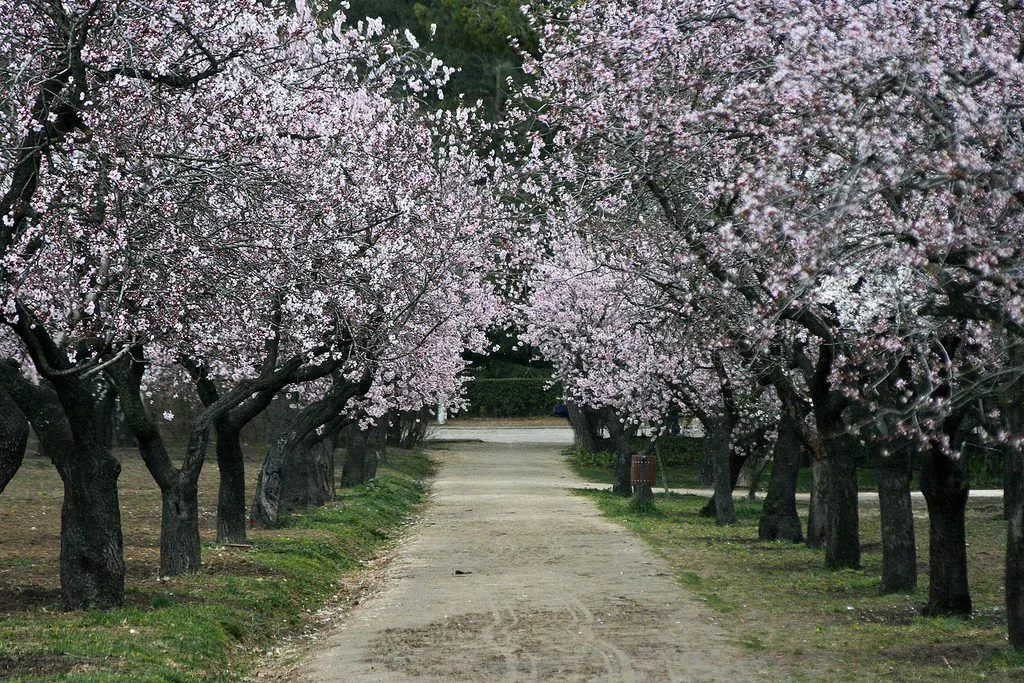
It's a real spectacle that lasts a few days between February and March (depending on the weather) to see its thousands of almond trees in bloom, creating a landscape of great beauty that gathers the curious, nature lovers, painters and the general public.
Casa de Campo
It's another of the city's best-known parks. Together with Retiro, it counts as Madrid's lung. It sits in the western area of the city. It has 1,722.60 hectares, making it the largest public park in Madrid coming from a natural space. It's 12 times larger than Hyde Park in London.It may have been a Roman settlement and a Visigothic necropolis has been discovered on its grounds. In the 15th century the Vargas family acquired several properties near the royal hunting grounds of El Pardo, and in 1519 Francisco de Vargas y Medina commissioned the construction of a country house where Carlos I used to spend long stretches. Felipe II noticed this place as a link between the Alcázar and the Real Sitio de El Pardo, which offered greater leisure possibilities and would provide hunting practice thanks to its abundant game. In 1562 Felipe II bought the estate from the Vargas. Under Felipe III, part of the lands were given over to land cultivation and the raising of cattle, birds and fish so the grounds had a certain economic independence. In Felipe IV's time, interest in Casa de Campo decreased in favor of the Palacio del Buen Retiro. At the end of the 17th century and the beginning of the 18th, this royal possession fell into decadence. With the arrival of the Bourbon dynasty, Felipe V ordered the remodeling of the gardens in French style. With Fernando VII's support it was declared a Royal Forest. During the reign of Carlos III, Casa de Campo's productivity boomed with new crops and irrigation systems to make it self-sufficient, and it also acquired new lands. In 1829 the passageway connecting the Royal Palace with the Puente del Rey was built. In 1878 it suffered a fire. After the proclamation of the Second Republic in 1931 it was ceded by the State to the people of Madrid. During the Civil War, trenches and fortifications of the rebels were established. Since 1946 it has remained open to the public. It was declared a Property of Cultural Interest in 2010 by the Community of Madrid.
It offers a great variety of important spots: the Puente de la Culebra, which is the artistic work of greatest value, the Huerta de la Partida lookout, the amusement park, the zoo, the cable car which connects Casa de Campo with Parque del Oeste in 11 minutes, the lake, and the Palacio de los Vargas which will have a cultural or museological use.
It's magical to see the color changes as the seasons change. In spring, Casa de Campo turns yellow with the blooming of the broom and pinkish tones with the blooming of the strawberry trees.
An ideal place for contact with nature. Sports are also practiced and it becomes a zone for trials and sports competitions.
Parque del Oeste
This park located in the west of the city covers nearly 100 hectares. Originally, this area was the city's main landfill. The park was created on the initiative of Don Alberto Aguilera, mayor of Madrid, who asked landscape designer Abraham Pedraza to lay out a place for Madrileños to walk and rest. It was built in two phases: the first beginning in 1893 and the second in 1906. During the Civil War, it was transformed into a battlefield, and the Cuartel de la Montaña was stormed by Madrileños in 1936 in search of weapons to defend themselves against the rebel army. Remains of bunkers and trenches can be seen at its northern end. At the end of the war, head gardener Cecilio Rodríguez took charge of its reconstruction. Between 1956 and 1973 the lands of the Cuartel de la Montaña were annexed, where the Templo de Debod is located.Singular places within the park grounds include the Cable Car for traveling to Casa de Campo, the School of Ceramics, the oldest building in Madrid: the Templo de Debod, and 3 machine-gun bunkers.
The most-visited part of the park in spring is the Ramón Ortiz Rosaleda located at the southern end. Walking in when the rosebushes are in bloom is a real exaltation of the senses thanks to the different colors and pleasant scents offered by nearly 600 rose species of different origins.
During the San Isidro festivities in May, the popular contest "Rose of Madrid" is held. Any citizen can vote for their favorite rose among a series of roses selected by the gardeners who care for the park. Every year, also in May, the International Contest of New Roses of the Villa de Madrid is held.