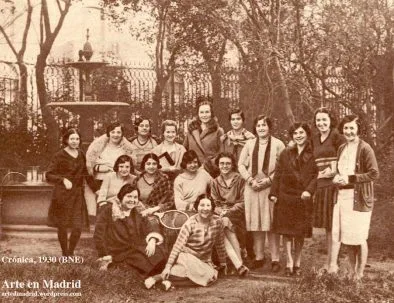
The 20th century begins on solid footing when it comes to enriching Spanish culture and the kickoff of the genius that would come later. With the Institución Libre de Enseñanza and the pedagogical renewal, numerous centers of university life and research were created for the young talents these institutions would house. This is how, in 1910, the Residencia de Estudiantes was created — the one we all know because the greatest minds of the Spanish Silver Age came out of there.
But the women of that era are as little-known as the male names that of course flood it are famous. Surely we all know Federico García Lorca, Luis Buñuel, Rafael Alberti, Luis Cernuda and a long list of names who triumphed at that moment. By contrast, the names of the young women who also belonged to the great Residencia de Estudiantes are not as well known, nor do they appear in the school textbooks. Today we're going to get closer to them, to their education and to how the great minds of Spain's golden age of literature and art passed through, on the female side.
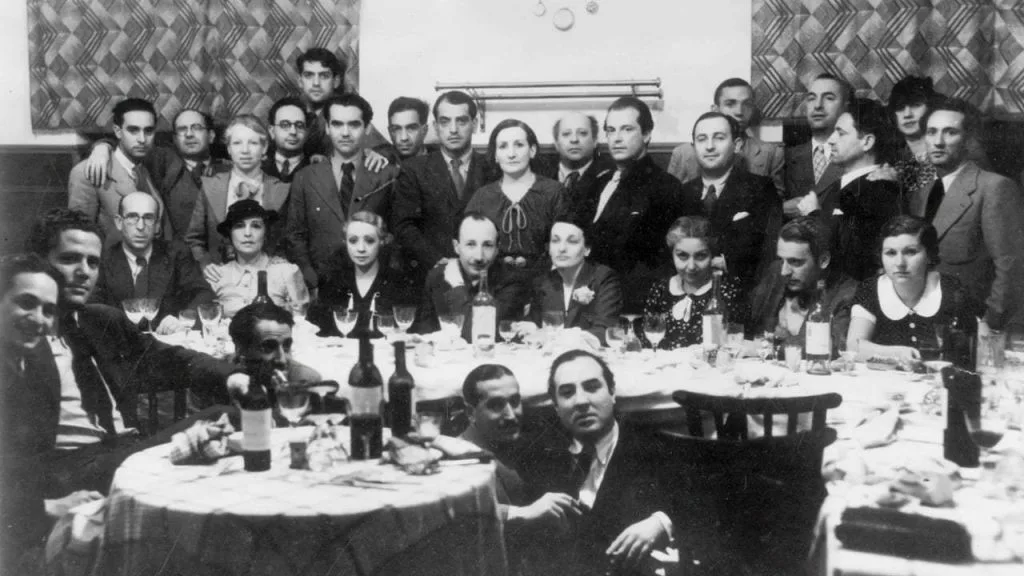
In 1915, the success of these student centers nationally and of the well-known Residencia de Estudiantes in Madrid led the Junta de Ampliación de Estudios e Investigaciones Científicas to expand its reach, forming the Female Group of the Residencia: the Residencia de Señoritas. And not just anyone would lead this new center — it would be the bravest pedagogue of all time, María de Maeztu, who would direct this group. Its opening was a revolution at the time, since women who approached university and higher education circles were really scarce. And best of all, it grew at a surprising rate, going from 30 residents in 1921 to 177 women in 1935.
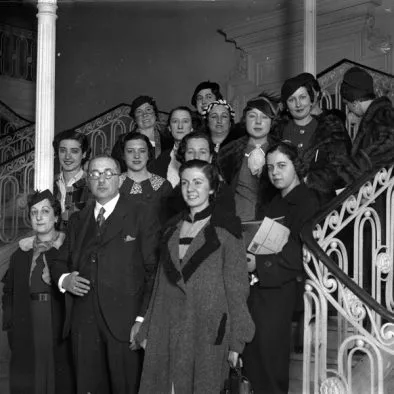
In its classrooms there was room not only for academia — artistic and musical lectures were also offered, both by recognized women like Victoria Kent, Gabriela Mistral and Clara Campoamor, and by renowned male intellectuals like Dámaso Alonso, Pío Baroja, Ricardo Baeza, Ortega y Gasset and a long etcetera.
Philosophy, anthropology, book reviews, dialogues, poetry and theater. Even the young women themselves gave lectures open to the general public, with great impact in the press of the time.
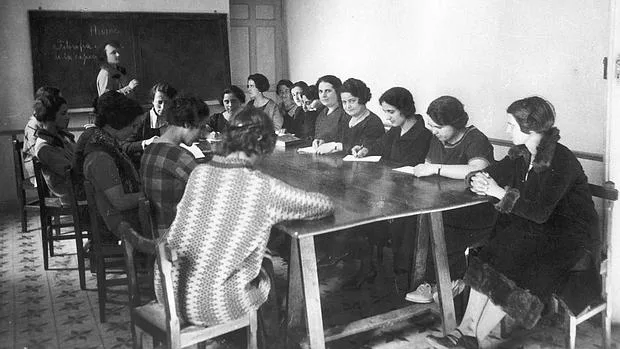
There's no doubt about it — the Residencia de Señoritas was talked about a lot. On October 27, 1931, in the Madrid newspaper Crisol, Corpus Barga said these words:
"The young women of the Residencia, leaning over the high gallery of the assembly hall, made one think, among many other things, of the chapel of San Antonio painted by Goya. A priestess as tall as a Gothic cathedral statue — though more Renaissance in style because of her headdress, almost a Florentine dressed in black — was speaking from the altar's place. In reality, we were in a North American university, where every religious evocation is possible. Where we were not, by any means, was in a convent school. The teaching of religious orders is mortally wounded in Spain not because of the laws of the Republic, but because the Residencia de Señoritas, like the Instituto-Escuela and other secular educational institutions, are increasingly successful with the public. You can see Spanish bourgeois society has changed. Before the Republic came it was already republican without knowing it. Now the Republic has definitively emerged from the Republican Committee of the La Latina district. La Latina must now be found precisely in the Residencia de Señoritas. It was the precursor, and may be the patron saint, of these young women students."In addition, it must be said they always had the support of the International Institute for Girls in Spain, an American institution that had set up its headquarters in Madrid at the beginning of the 20th century and provided them with all kinds of necessary materials, faculty for lectures, methods and books, even loaning them some of its buildings and arranging exchange scholarships with American women from colleges that belonged to said Institute.
To conclude, most of the important women who had something to say in Spanish society of the first 40 years of the 20th century were undoubtedly related in some way to the wonderful Residencia de Señoritas.
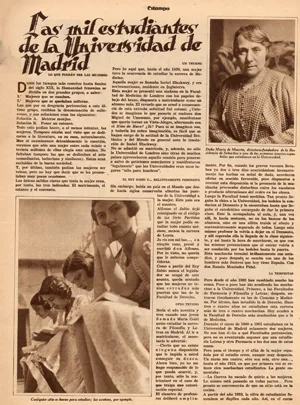
As notable residents: Matilde Huici, Delhy Tejero and Josefina Carabias. Others like María Goyri, María Zambrano, Victorina Durán and Maruja Mallo were part of its faculty. Zenobia Camprubí, Gabriela Mistral, Victoria Ocampo, María Martínez Sierra, Clara Campoamor and Concha Méndez actively participated in the training and activities of the students. From within its halls also emerged the republican Lyceum Club Femenino and the Asociación Universitaria Femenina, which would defend women's rights within university faculties.
Names that achieved notoriety, yes — women who came from every corner of Spain and a common spirit that united them: the new model of the independent and professional avant-garde woman, still exotic in the society of her time.