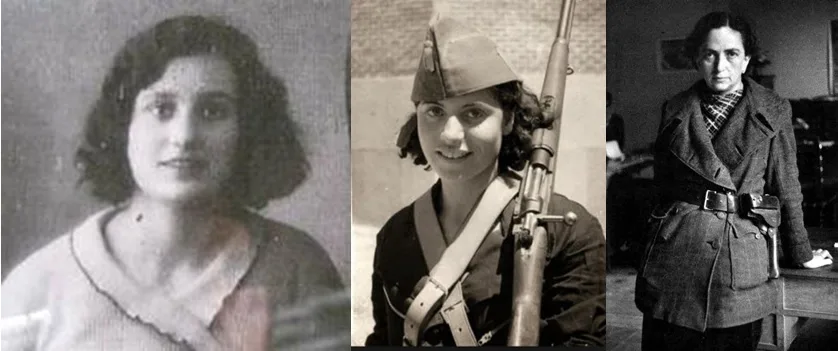
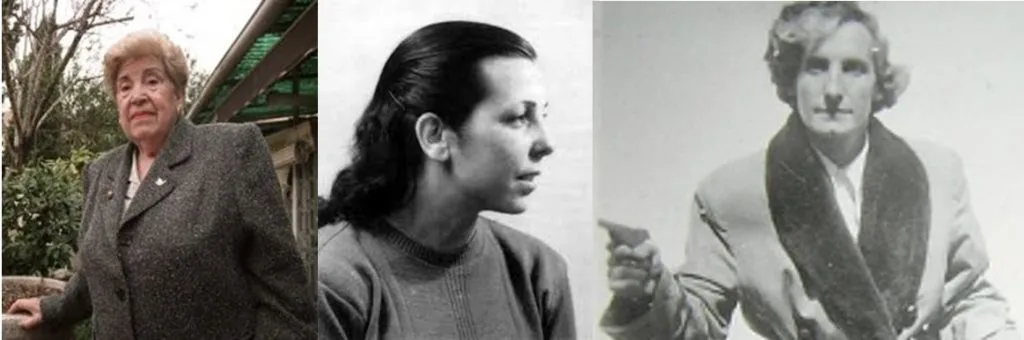
The milicianas are a chapter of our country's history that for many years remained forgotten by the bulk of our society — partly because it was hidden from us, or transmitted in a way very different from reality.
If we ask today's young people about the role of the milicianas in the Civil War, we realize that practically all of them are unaware these brave women existed. This stems from the superficial and simplistic vision that schools and especially high schools teach in relation to the Civil War and the Franco period — making it, for now, very hard to expect a gendered narrative on the matter to be passed on to new generations.
It would not be possible to understand why these women mobilized and took up arms in defense of the Second Republic without recounting a whole series of changes that take place during the reformist biennium — the necessary push for the female image to move away from the prototype of perfect wife and angel of the home that had predominated until then, and which would return with the dictatorship.
Among the reforms carried out during the Second Republic, it's worth highlighting the modification of the 1907 Electoral Law in the urgent decree of May 8, 1931, and the establishment of legal and political equality between men and women in the 1931 constitution. The first of these meant women's entry into the political world by becoming eligible candidates, and the second led to equating the legal age of men and women at 23 and to universal suffrage. This meant women's arrival in public life, no longer being relegated solely to the family sphere. To these measures we must add the legalization of divorce, the recognition of civil marriage and the establishment of public, secular and mixed schools.
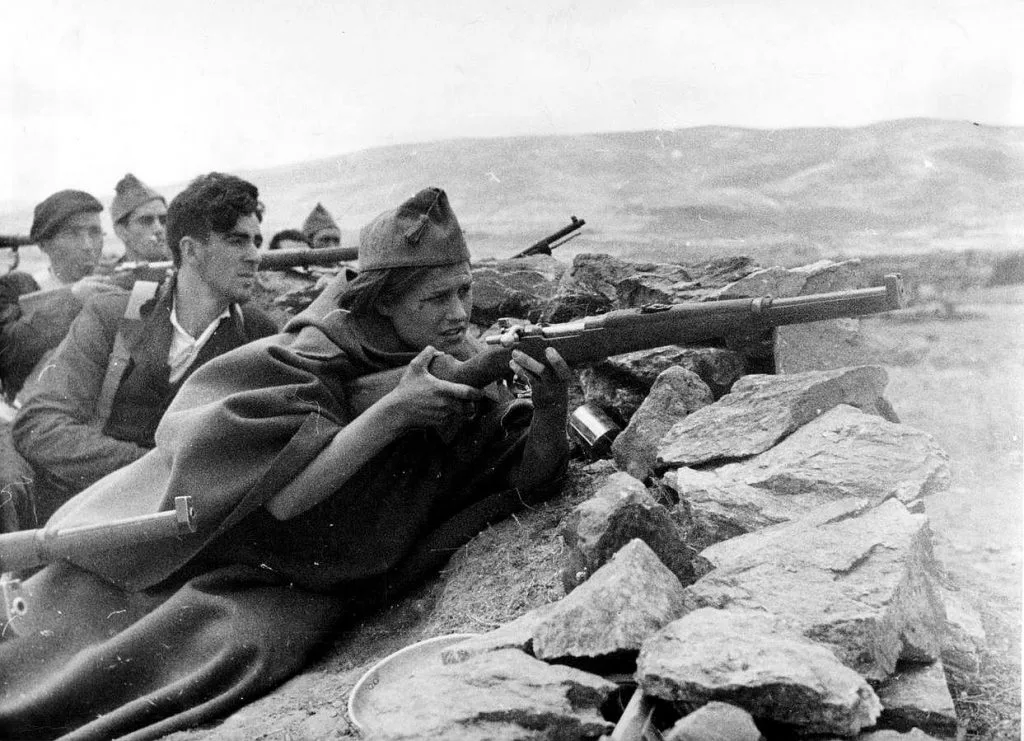
With the outbreak of war in 1936 and the threat of fascism looming over the future, the consolidation of these advances was put at risk — which is why many women decided to join the militias, take up a rifle and fight as one more comrade.
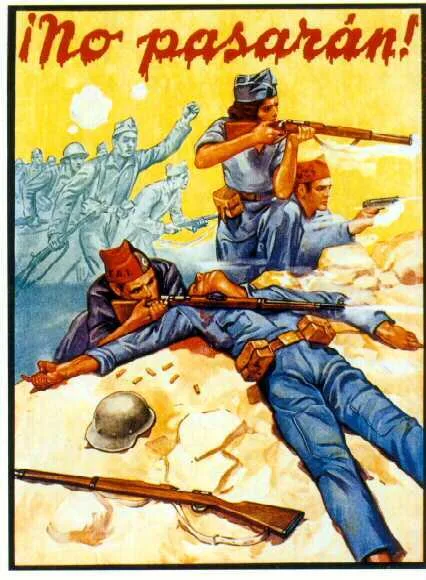
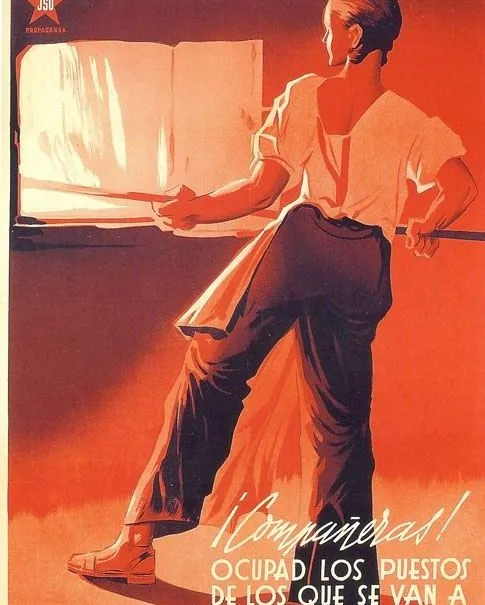
At first, the arrival of women at the front was allowed and even seemed to be encouraged through the posters generated at that moment, which weren't so much seeking female participation as appealing to the conscience of the men who hadn't enlisted. Women joining the militias, taking up the rifle and training like their male comrades was only allowed during the first months of the war — partly due to the governmental and military collapse and disorganization of the Second Republic in the early stages of the conflict, on top of the existence of paramilitary groups that took charge of organizing the war's first moments.
This situation of relative equalization of women with men in the military sphere lasted barely a year, after which an advertising campaign began that sought women's return to the rear for the development of support tasks like the care of the sick and minors, the preparation of essential elements at the trenches (uniforms, bandages, food boxes) and the development of the industrial and field jobs that men had left behind upon joining the army. As unusual as it may seem, feminist associations threw themselves entirely into organizing these activities — notably the AMA (Agrupación de Mujeres Antifascistas) and Mujeres Libres, which adopted the discourse that the woman's place was in the rear developing these labors fundamental to the war effort.
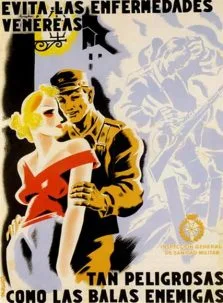
But these reasons weren't the only ones used to push women away from the front — they even went to the extreme of pointing to the female collective as a public health problem, arguing that the presence of milicianas would inevitably lead to the transmission of venereal diseases, even going so far as to accuse this entire collective of prostitution. It was a smear campaign that took root quickly and effectively in society, considerably reducing the number of women soldiers.
This produced the stigmatization of this collective, promoted mainly by the government of the Second Republic in a gradual way — for which the design of posters was fundamental.
- Edit Column
- Duplicate Column
- Add Column
- Delete Column
Evidently after the war and with victory for the Nationalist side, the figure of the miliciana was forgotten — and with her the proper names of capable and brave women who deserve to be remembered and to resonate today:
María Pérez Lacruz, La Jabalina, anarchist miliciana who fought in the Iron Column; Rosario Sánchez Mora, La Dinamitera, woman soldier; Micaela Feldman de Etchebéhère, Mika, Argentine captain of the POUM; Fidela Fernández de Velasco Pérez, Fifí; Julia Manzanal Pérez alias Chico; Casilda Hernáez Vargas, Basque libertarian miliciana; Enriqueta Otero Blanco, teacher and miliciana of culture; Amparo Poch y Gascón, doctor and miliciana; Aurora Arnaiz Amigo, law student and miliciana; and Anita Carrillo Domínguez, captain and political commissar.