POPULAR MADRID SAYINGS
If you've just arrived in the capital, if you were born in Madrid, or if you've been living in the city for a few years, you've surely heard and used popular expressions whose meaning is more or less easy to interpret, but whose history is more obscure. These phrases convey advice, lessons or thoughts particular to Madrid culture, and generation after generation they have endured. Keep reading this blog to get to know Madrid through its sayings:"Madrid: nine months of winter and three of hell"
A reference to Madrid's extreme climate, with extremely cold winters and excessively hot summers and barely any autumn or spring (this is true, though not really attributable to this year).Madrid is the highest capital in Europe, sitting at 650 meters above sea level. It lies on a plateau surrounded from the southwest to the northeast by the Sierra de Guadarrama, which provides cold winds in winter that sweep away its pollution, while the summers are dry and hot.
Try our free walking tours in summer and in winter and you'll be able to experience the meaning of this saying.
"San Isidro Labrador, take away the rain and bring out the sun."
This one is used to mark that, from this spring date onward, temperatures turn warmer and the chance of rain drops.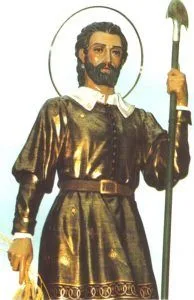
San Isidro is born in 1080 in Mayrit. He was a poor laborer who worked as a day laborer cultivating other people's lands, like those of Juan de Vargas. For practically the entire life of the saint, Mayrit lived through turbulent times since there were continuous wars between Christians and Arabs. This causes San Isidro to move to Torrelaguna where he meets María Toribia, beatified as Santa María de la Cabeza, whom he married and with whom he had his son Illán, also a saint.
Centuries later, Pope Paul V, following the Church's rules after the Council of Trent, decides to beatify San Isidro in 1619 and decreed that the date of his feast day would be May 15. In 1622 he was canonized by Gregory XV.
If you want to learn about the miracles of San Isidro, you can take our Habsburg Madrid free walking tour.
"Until the fortieth of May, don't take off your coat":
This means the need to keep some winter clothing close by since, until June 9, temperatures can be changeable and we can find ourselves with hot days and cold days more typical of winter than of summer.It's a saying that has become popular throughout Spain and is used about the need to prevent colds caused by being underdressed in such an unstable season as spring.
According to other sources, this saying may have its protagonist in the last of a long row of brothels that stood on one of the streets of 17th-century Madrid (it's thought it may be today's Calle Montera).
This place was called the "Cuarenta de Mayo" and was the most famous one for the beauty of its women. So this set phrase was a way of warning the gentlemen that they should walk past the early ones on the street and not stop until reaching the end, where they could finally take off their coat or clothes.
The first written reference to this expression is in a poem by writer Francisco Rodríguez Marín in 1896:
Until the fortieth of May
Don't take off your coat
And if it rains again,
Put it back on.
"The Arganda train, whistles more than it runs":
This is used for those people whose strength leaves them through the mouth, talking about fantasies and master plans they think up but never carry out.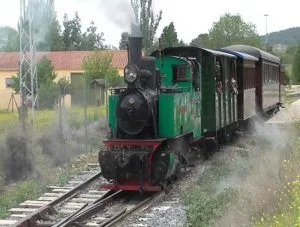
The Arganda train was launched back in 1881 when the Madrid–Vaciamadrid railway begins works on what was going to be a freight train with its last stop in Arganda del Rey to supply the area's quarries.
The service was inaugurated on July 30, 1886 with steam-powered, coal-driven trains that moved at a very slow speed and at all level crossings had to whistle to warn of their approach at different points.
It also became a popular form of transport for travelers from the station near the Niño Jesús hospital. However, due to the rise of other passenger transport like buses and cars, on April 1, 1953 the passenger service was ended and the line focused only on freight transport. In 1999 the line came to its definitive end.
Thanks to the Vapor Madrid association and their railway passion, today we can once again enjoy the Arganda train that whistles more than it runs.
"More chulo than an eight":
This is said of someone who takes care of how they dress, or because they have an insolent, vain or arrogant character with a certain touch of charisma, elegance and charm.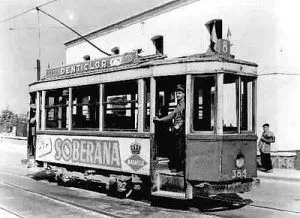
The number 8 tram line crossed Madrid from Puerta del Sol to San Antonio de la Florida, running along Calle Preciados, Plaza de Santo Domingo, Calle de Leganitos, Paseo de San Marcial and Paseo de San Antonio de la Florida. The line was used by chulapos to head to the dance every May 15 in the Pradera de San Isidro (the name of the park dedicated to the saint). The tram reached the Manzanares area, and the locals there started using this expression upon seeing those "eights" go by full of chulos. With wit and grace, they emphasized that nothing could exist with more chulería than a tram packed with chulapos.
"It ended like the Rosary of the Dawn":
A reference to a fact or event we know or sense will end badly.This expression is used throughout Spain. As has happened with other sayings, in the capital we have our own version which says that during Holy Week two brotherhoods — possibly those corresponding to the Virgin of Nuestra Señora de la Aurora and to the Virgin del Henar — were doing their procession. One of the groups carried lanterns while reciting the rosary, and the two coincide early in the morning on a narrow street. Neither of the processions was willing to give way to the other, and the brothers ended up fighting and using their lanterns in the dispute over who would pass first.
"He who doesn't pass through Calle de la Pasa doesn't get married":
It means that, before civil marriages existed, in order to marry, the contracting parties had to go to the vicarage which lay inside the Episcopal Palace, since the 18th century. This building had its entrance on Calle de la Pasa, so it was mandatory to go through here as a step before the wedding.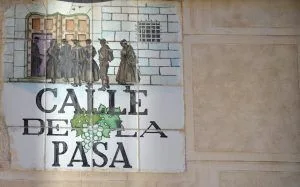
From the time when the infante Don Luis de Borbón y Farnesio (1727-1785), son of Felipe V, was cardinal-archbishop, raisins ("uvas pasas") were handed out from the entrance of the Archbishop's Palace on Calle de la Pasa. That's where the street's name comes from.
Later, the archbishop moved to Calle Bailén and the Madrileños, instead of forgetting this saying, modified it and adapted it to the new location of the vicarage:
"He who doesn't pass through Calle Bailén won't marry well"
"Pulling a Vicalvarada":
This is used for plans made on the fly, where after their execution the result is the opposite of what was expected.The historical event it alludes to is the uprising in Vicálvaro of Lieutenant General Leopoldo O'Donnell against the national government on June 30, 1854. The combat is known as La Vicalvarada and its result was undecided since both sides proclaimed themselves victors.
The rebels sought the restoration of the national militia, the suppression of the 1845 Constitution and amnesty for political prisoners.
After a few months of political turmoil, Isabel II calls Espartero to form a Government, and so began the Bienio Progresista.
"In the fifth pine":
This is said of something or someone that's located very far away.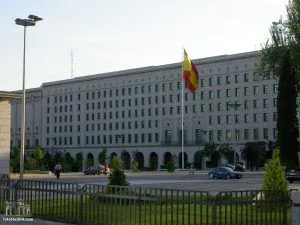
During the reign of Felipe V, 5 pines were planted between Paseo del Prado and Nuevos Ministerios. The first of them was near Atocha. The others stood at notable distances from each other and continued along the entire avenue up to the spot where today we find Nuevos Ministerios — the place where the fifth pine stood.
The Madrileños used the trees to mark their meeting points (more or less the same thing we do today by meeting at the statue of the Bear and the Strawberry Tree). It was common for meetups to take place at any of the first three pines since they were the closest to the city center. The fifth, being the farthest and almost on the city outskirts, wasn't frequented by passersby. But it was the one chosen by lovers, precisely so they could exchange the kisses and caresses that at the time were frowned upon if done in public.
A second, less-known theory — though one that does have more logic than the previous one — talks about the executions of convicts. "The fifth pine" may have been a way of referring to the gallows located at crossroads, on the outskirts of cities, so that all passersby could see that the law was being enforced there.
"It has more exits than the Puerta de Alcalá":
A reference to someone who has answers for everything.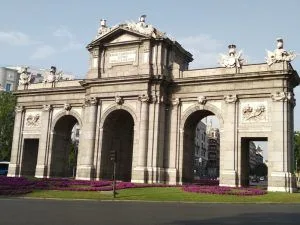
The new Puerta de Alcalá was commissioned by Carlos III. It was laid out with more arches or exits than the previous one. From this gate numerous roads led off to different places.
If you want to get more information about the Puerta de Alcalá, you can book our Monumental Madrid free walking tour.
The streets and corners of Madrid hold a multitude of popular sayings and phrases. Explaining them all in a single post would make it too long. But if you're hungry for more, leave your comments and we'll create more posts on the same theme.
See you next time, wakeuperos!