Many women today are fighting to reclaim rights that sometimes seem to have been lost in our current society. The poor conditions in which the so-called "weaker sex" has always lived began to be unacceptable to some, and "more than just a few" raised their voices to complain and demand a new society where they wouldn't be oppressed simply for being women.
The idea of an International Day dedicated to women emerged at the end of the 19th century, in the middle of the industrial revolution and during the rise of the labor movement — though if we go further back in time we already find this in ancient Greece, with the struggle reflected by Aristophanes in his play Lysistrata, which tells how she began a sex strike against men to put an end to war. Or we can travel to the brave Parisian women of the French Revolution a century earlier, who demanded liberty, equality and fraternity by marching on Versailles to demand women's suffrage.
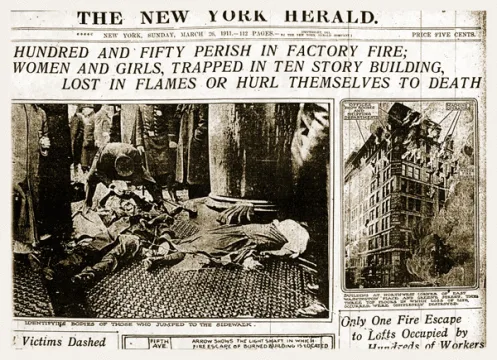
However, it wasn't until the early years of the 20th century that some international left-wing organizations began to proclaim a specific day of struggle for women and their rights. Without a doubt the most-told story is the one referring to what happened in 1908 at the Cotton textile factory in New York, when on March 8, 146 women who were locked in protesting their low wages and miserable working conditions were burned to death by incendiary bombs after refusing to leave the building. (Some say this fire tragedy actually refers to the one on March 25, 1911 when 140 young women, mostly immigrants, died in the Triangle Shirtwaist Factory fire, also in New York). What matters is that after this strike of textile workers, the Socialist Party of the United States, in support of the workers, declared February 28 as International Working Women's Day, which until 1913 continued to be celebrated on the last Sunday of every February, spreading to other countries.
It was also in 1910 when the 2nd International Conference of Socialist Women was held in Copenhagen, where the demand for universal suffrage for all women was reiterated and the celebration of an international day was proclaimed (without a specific date), where in addition to the right to vote and to hold public office, the right to work, to professional training and to non-discrimination at work were all proclaimed. Things which, as we can see, are still being demanded today, in 2018.
We jump to March 8, 1917 in Russia, a transcendental day in the history of women's rights — this time the Soviet women declared a "peace and bread" strike, and after the October Revolution and the abdication of the Tsar, the provisional government granted women the right to vote. In addition, for the first time in history, divorce and abortion became legal, and March 8 was declared an official holiday.
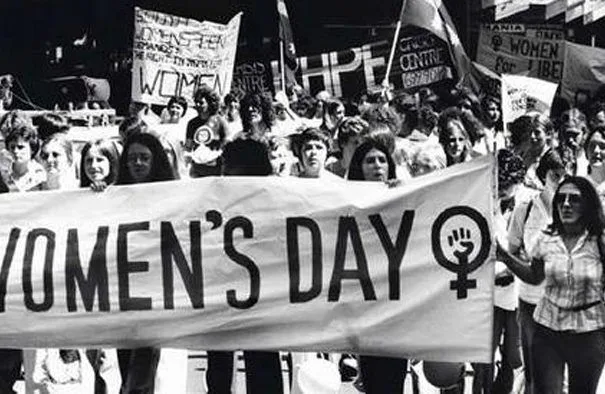
In Spain, the day's official status didn't arrive until 1936. And from that decade of the 1930s onward many other countries would include March 8 as a national celebration, as the regulatory base of women's civil, political and social rights kept expanding — these rights would have their real "boom" from 1975 onward, when the UN officially recognized the day, and most countries ended up joining.
Today, questions related to gender equality continue to be debated by different States in what they call the "Session of the Commission on the Status of Women", the most recent held in 2014.
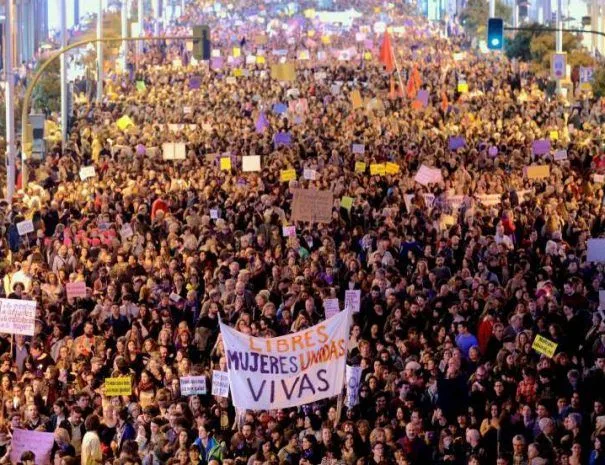
But the most relevant thing about this chain of events is that after a century of struggle — with everything the first ones who took to the streets fought for, and the next ones, and those who came after — today there are still people who keep asking why there is an International Women's Day and why every March 8 the cities of the world are flooded by a purple tide trying to raise its voice in a tireless search for its rights.
Join our Free Tour Forgotten Women of Madrid and discover what official history has tried to push aside.