We've walked past their doors countless times without realizing they're as tied to Madrid's history as our own lives. When we were born they were already on Madrid's streets; we became teenagers and we kept seeing them; as adults we think they'll stay with us much longer. Sometimes, out of unfamiliarity or lack of time, we've never crossed the threshold of their doors to enjoy all the magic they hold inside and take advantage of the almost unique products they offer. Christmas is a special occasion and gives us the perfect excuse to dive into these establishments that are witnesses to relevant events that have happened in Spain's capital. We dedicate this blog to a selection of Madrid's century-old shops that have special relevance at Christmas.
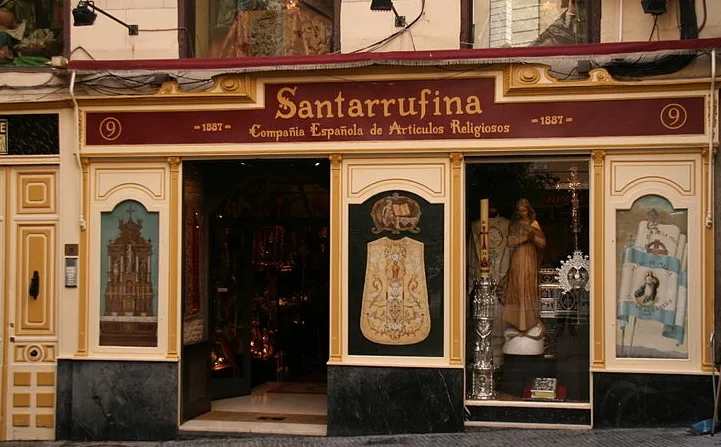
Santarrufina
At Calle Paz 9 we find this business dedicated to creating new projects for religious objects or to restoring goldwork, religious imagery, ornaments, textiles…It started operating in 1887 in the same premises where they still serve customers today. Its original façade — still in perfect condition — is catalogued and protected by the Madrid City Council.
Lotería Sol
Around the same time the tradition of the twelve lucky grapes began, we start hearing about Lotería Sol, known as the Lottery of the Big Prizes ("Gordos"), at Puerta del Sol 13. During the Civil War a bomb fell at the very door of the administration, and through luck and chance, it suffered no damage. With the renumbering of the Puerta del Sol, the administration became Number 12.It has handed out various prizes during its run since 1896, including the Christmas "Gordo" and "El Niño". Being the fourth-best-selling lottery administration in the city, we're confident this year it'll once again give us some kind of prize.
Casa Mira
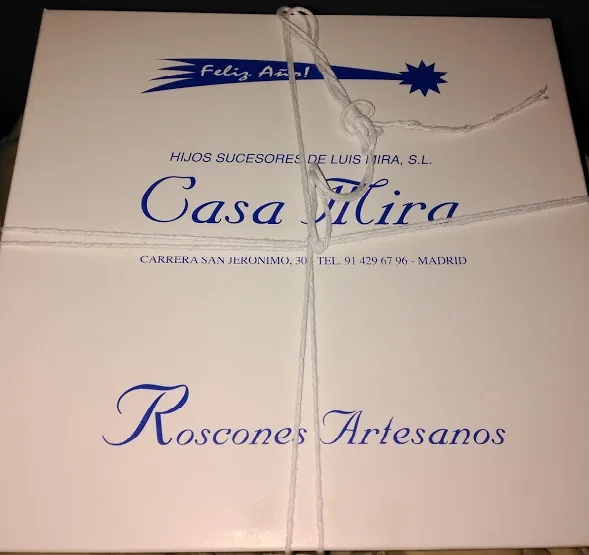
In 1842 the most representative poet of Romanticism, José de Espronceda, dies in Madrid. That same year a young Luis Mira leaves Jijona and arrives in the capital where he begins selling his turrón at a stall in Plaza Mayor. He manages to serve the Royal House from Isabel II to Alfonso XIII. The business is passed down from generation to generation up to its current owners, the sixth generation of the same family who continues to make their turrones by hand.The fame of this establishment located at Carrera de San Jerónimo 30 began to spread quickly through Madrid until becoming a quality benchmark. Although in this business we can also find other exquisite sweets.
Mariano Madrueño
In 1895, while Cánovas del Castillo rises to power, Mariano Madrueño opens his liquor and syrup factory in central Madrid. He used artisanal techniques in their making and sales were in bulk. In 1999 the manufacturing closed, leaving only the oldest liquor store in Madrid at Calle Postigo de San Martín 3. In its underground cellar, the different wines are still preserved and aged.In the early days of this business only their own brands were sold. After the civil war they began trading other brands, and at the moment the third generation of the Madrueño family sells national wines and cavas.
Posada de la Villa
It was located in the only flour mill of the capital, which in 1642 became the first Inn of the Court located on Calle Cava Baja 9. At that point, restaurant and lodging went completely hand in handas a business, since in the inns' dining rooms only the ingredients the traveler brought could be served to be cooked, and no one who wasn't lodging there could come in and be served in the dining room.
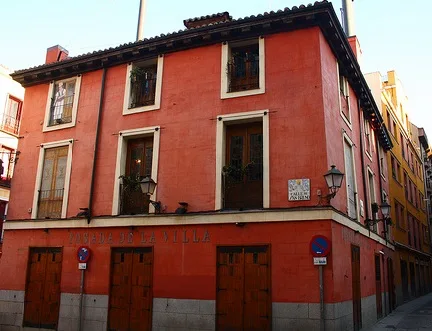
This kind of activity began to decline, affecting the inns of Cava Baja until in 1980 it was rescued from ruin by an innkeeper who invested two years of restoration, turning it into a successful roasting oven. It has been awarded various prizes like the Gran Collar Gastronómico Internacional and inclusion in the Michelin Guide.
In terms of cuisine, the gallina en pepitoria (chicken in almond sauce), the roast suckling lamb and the typical Madrid dish par excellence, the cocido, made in a clay pot, all stand out.
Mercado de la Cebada
In the 16th century the Plaza de la Cebada was used as a market for vegetables, cereals and pork products. In the 17th century it was conditioned as a public garden for the San Isidro festivities. In the first half of the 19th century it was used as a scaffold. However, the function of this plaza changes when, in 1868, the first building of the Mercado de la Cebada is planned. It's built between 1870 and 1875 and inaugurated by Alfonso XII. The main construction material was iron, as was the fashion at the end of the 19th century — in fact the columns are brought from Paris. It became Madrid's Central Market for Fruits and Vegetables, supplying the city's small merchants until being replaced by the Mercado de Legazpi, then becoming a food market in the La Latina neighborhood, completed with the sale of fish and meat. In 1956 it was demolished for hygienic reasons, rebuilt in 1958 and inaugurated in 1962. Today the market coexists with exhibitions and events that turn it into a place full of joy and color.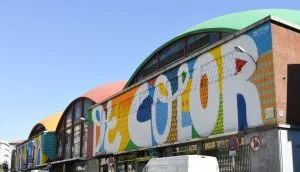
Side façade of the market
If you've enjoyed this entry and want to discover more historic establishments, don't miss our free tour Hundred-Year-Old Shops.If you're interested in learning more about other Madrid stories, you can visit our website and access the entries of our blog or the free tours menu.