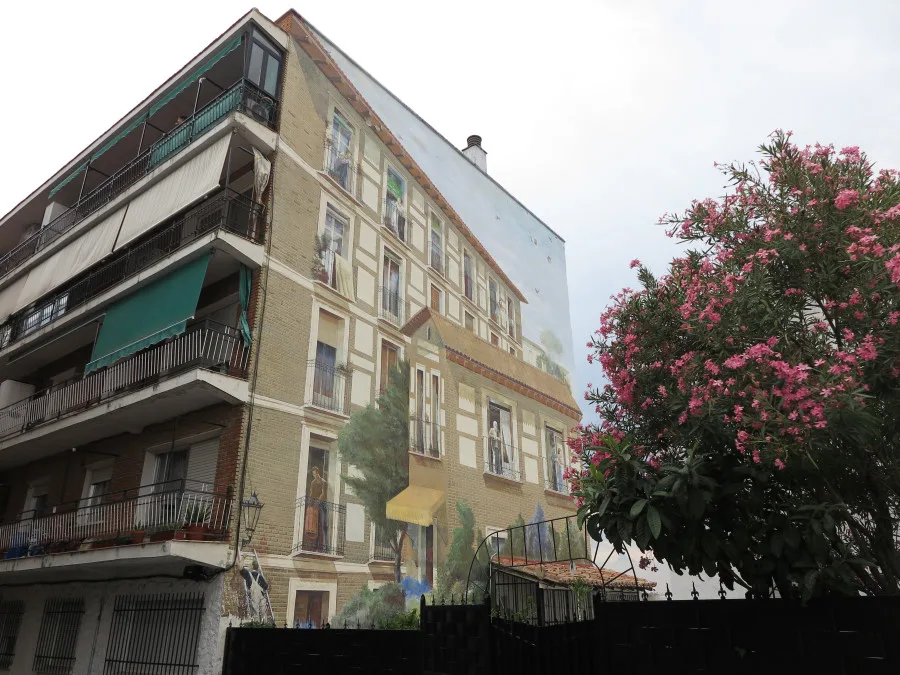
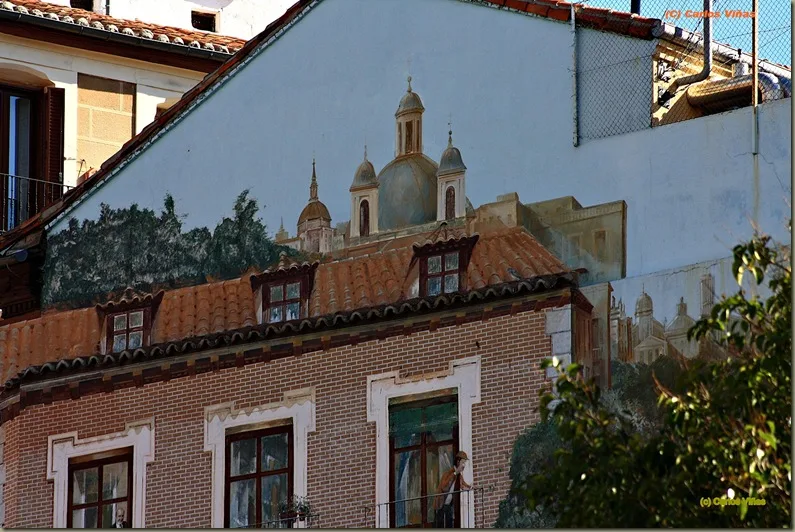
A city as big as Madrid radiates color and life through every street, and without a doubt, one of the things that most often catches the eye of the passer-by walking through their favorite corners is the trampantojos (trompe-l'œils).
We define a trampantojo as a "trick of the eye" — an illusion that fools by making someone see what isn't really there. The term as such comes directly from the French trompe-l'œil and consists of a pictorial technique that plays with perspectives and planes, dissolving the painter's representation to give way to the fictitious reality of a feigned physical setting. In other words, it tries to simulate a reality through painting. It's an ancient resource that the Greeks and Romans already used in their time, and above all it was taken to its peak during the Baroque artistic period on the ceilings of churches and palaces around the world. Different techniques were used — tedious and complicated, but reflecting a unique and highly stunning result.
It could also simulate landscapes, materials like marble or wood, hide defects or simply brighten a room.
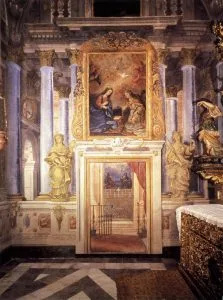
A very famous example here in Madrid is found in the Monasterio de las Descalzas Reales where we can find the "Capilla del Milagro", in which the trompe-l'œil creates the architectural structure of the interior as well as the box and the rich vegetal and gold-leaf decorations around it, or the bars opening to another space beyond. This convent holds true wonders.
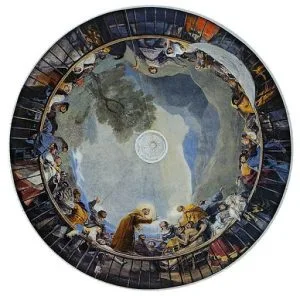
But if we have to pick one of the painted ceilings done with this technique in the capital, we go with the dome of the Ermita de San Antonio de la Florida, from the 18th century. Who painted this magnificent work? None other than Francisco de Goya, who plays perfectly with the meters he has to create an optical effect where he places a great number of figures around a balustrade. All of them attend the miracle of San Antonio, and all of them represent the people of Madrid.
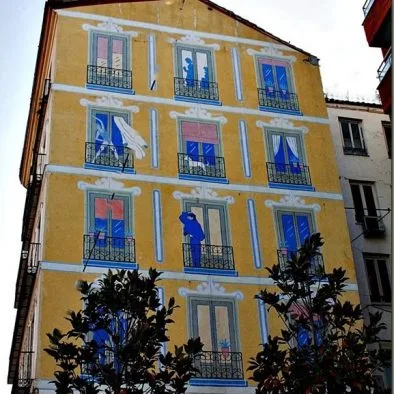
Walking calmly through the streets of some of Madrid's most famous neighborhoods, we'll come across large canvases — house party walls, blank surfaces between small plazas or courtyard façades that become the perfect setting for creating urban trompe-l'œils. What do we usually find in this typology? Imaginary openings of nonexistent streets, building extensions, balconies that aren't really there, open skies, infinite staircases, Madrid cats camouflaged among the buildings…
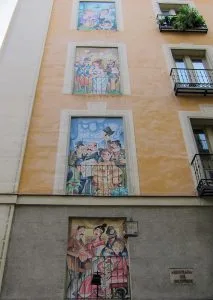
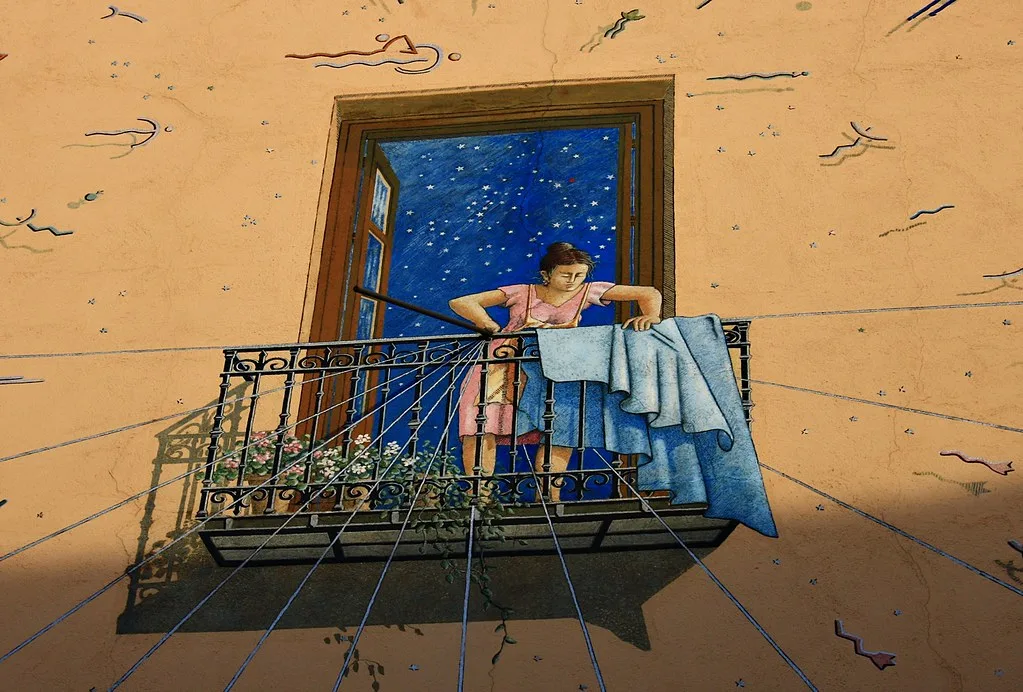
Below we leave you a few that you'll surely recognize. The first is the lively gathering Mingote creates with those colorful balconies, found on Calle de la Sal heading up to Plaza Mayor. It's one of our favorites! Another of the most legendary adorns the Lavapiés neighborhood — the famous Casa de la Vela, where we can see a neighbor leaning out the balcony hanging laundry, with a sundial created on the façade around her. Without a doubt, curious and authentic.
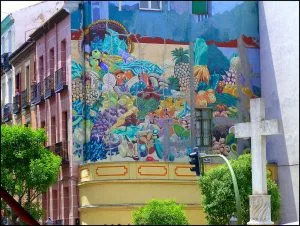
Most of the works that cover Madrid's mural façades were created in the 1980s. For example, the murals on Plaza de Puerta Cerrada, the work of Alberto Corazón, made in 1983. Next to the enormous set of fruits and vegetables that can be seen today was the so-called "carniceros' rooster", which disappeared in the 1990s after the building's renovation.
Another of the authors of some of the most picturesque murals on Madrid façades is Alberto Pirongelli, who has works in several areas of Madrid that are truly impressive. Below are some of his trompe-l'œils: at Plaza de los Carros and on Calle Montera.
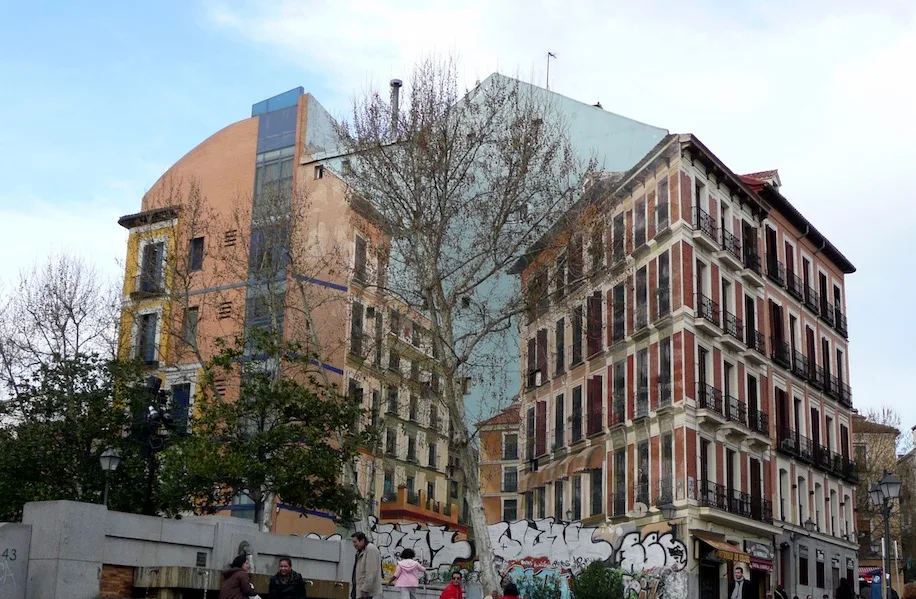
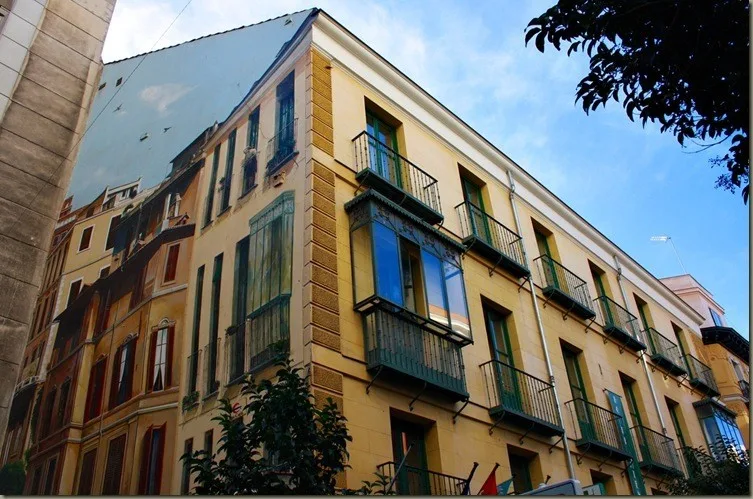
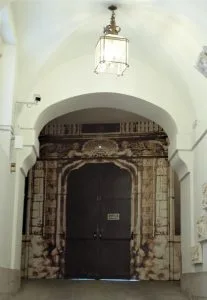
Possibly one of the most hidden and curious is at the Real Academia de Bellas Artes de San Fernando, attempting to simulate the lost original door designed by Churriguera that opened onto what would have been the old palace. When the building was restored, this door was lost, but the panel covering it now appears to be made of stone — not a painted illusion.
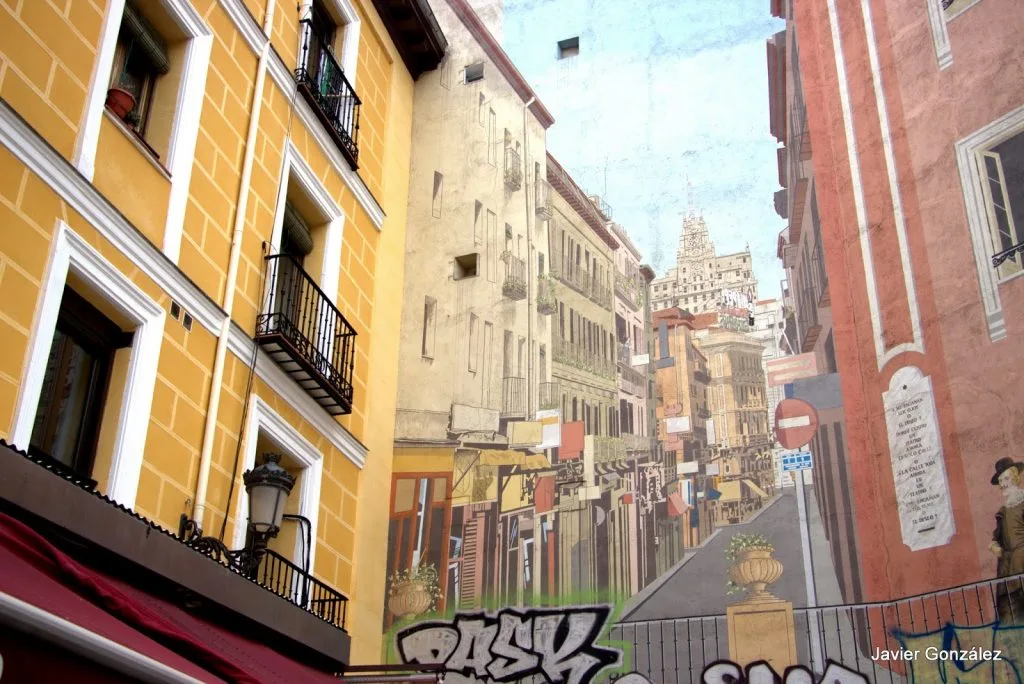
On Calle de la Cruz we glimpse one of the most accomplished — where we can see a fictitious street and the Telefónica building of Gran Vía rising in the background. This one is the work of Ángel Aragonés.
And although we love them all, we'd love for you to comment on which is your favorite — if there's a secret one out there on a street, shop or neighborhood you know. Leave it for us in the comments!